Walk through any factory, and you’ll see dashboards everywhere—OEE on the production line, cash flow in the CFO’s office, labor numbers pinned up by HR. Each tells its own story. The problem is, these stories rarely line up. One metric climbs; another stalls. And you’re left wondering: If the plant is running better, why isn’t cash moving faster? If labor is so productive, why aren’t orders closing quicker?
That’s why so many investments in AI, automation, and digital transformation end with this nagging question: “Where’s the ROI?” Metrics that don’t talk to each other can’t tell you what really moved the needle. To get clear answers, you need something more than another dashboard—you need a loop that ties it all together.
Let’s put it bluntly: Metrics are lonely. A plant may push OEE up by a few points, but finance still chases overdue invoices. Or you squeeze extra output from your workforce, yet quality or delivery times slip. The hard truth? One team’s win often becomes another team’s headache.
It’s not just a theoretical risk—it happens on real shop floors. There are cases where a push to maximize machine uptime led to excess inventory, which then choked cash flow. Or finance imposed new receivables rules that improved the balance sheet but threw production schedules into chaos.
That’s the core issue with isolated metrics: they make you think things are better when the business as a whole hasn’t moved. The “loop” between operations, finance, and workforce is broken. Fixing OEE doesn’t guarantee free cash flow moves. Improving labor output doesn’t always mean orders are shipped (and paid for) any faster.
To get real progress, you need to see how these numbers actually interact—not just as KPIs, but as links in a chain that either moves together or not at all.
Now flip it: High labor productivity can shorten lead times, but if machine availability tanks, you’ve just shifted the bottleneck. And if finance isn’t pulling in payments fast enough, working capital gets locked up—no matter how efficient the plant is.
It’s all connected. Each metric pushes and pulls on the others. The “loop” isn’t just about measurement; it’s about feedback. If you can see where the loop is stuck, you can do something about it. The problem? Most manufacturers can’t see this loop clearly, let alone manage it in real time.
Here’s where AI steps in. Not with hype, but with actual connective tissue for your systems. Think about all the data your factory generates—MES signals, ERP orders, HR shift logs, finance records. It’s a mess, and, left alone, it stays a mess. But AI can wrangle it.
An AI-enabled platform can ingest all those signals, correlate them, and surface not just what happened, but why it matters across teams. For example: The system spots that an uptick in OEE after a process change is driving more finished goods, but also sees a rise in rework (which operations alone might miss). It predicts that this will impact delivery schedules—and cash collection. With the right nudges, production managers can adjust, finance can prepare, and the plant doesn’t get caught flat-footed.
AI doesn’t just connect data; it balances trade-offs. Want to push OEE higher? The system will flag if this strains labor or creates excess inventory. The feedback isn’t just a warning—it’s actionable. Operators can see the impact of their choices on cash flow. Finance can understand the root causes behind delayed collections. Leaders can ask better questions.
Without this level of cross-functional visibility, every improvement is a shot in the dark. AI makes the cause-and-effect visible, letting you close the loop in real time, not after the fact.
That’s the “closed loop” in action. Everyone, from the floor to the boardroom, sees how their moves ripple through the business. And when you can see it, you can change it.
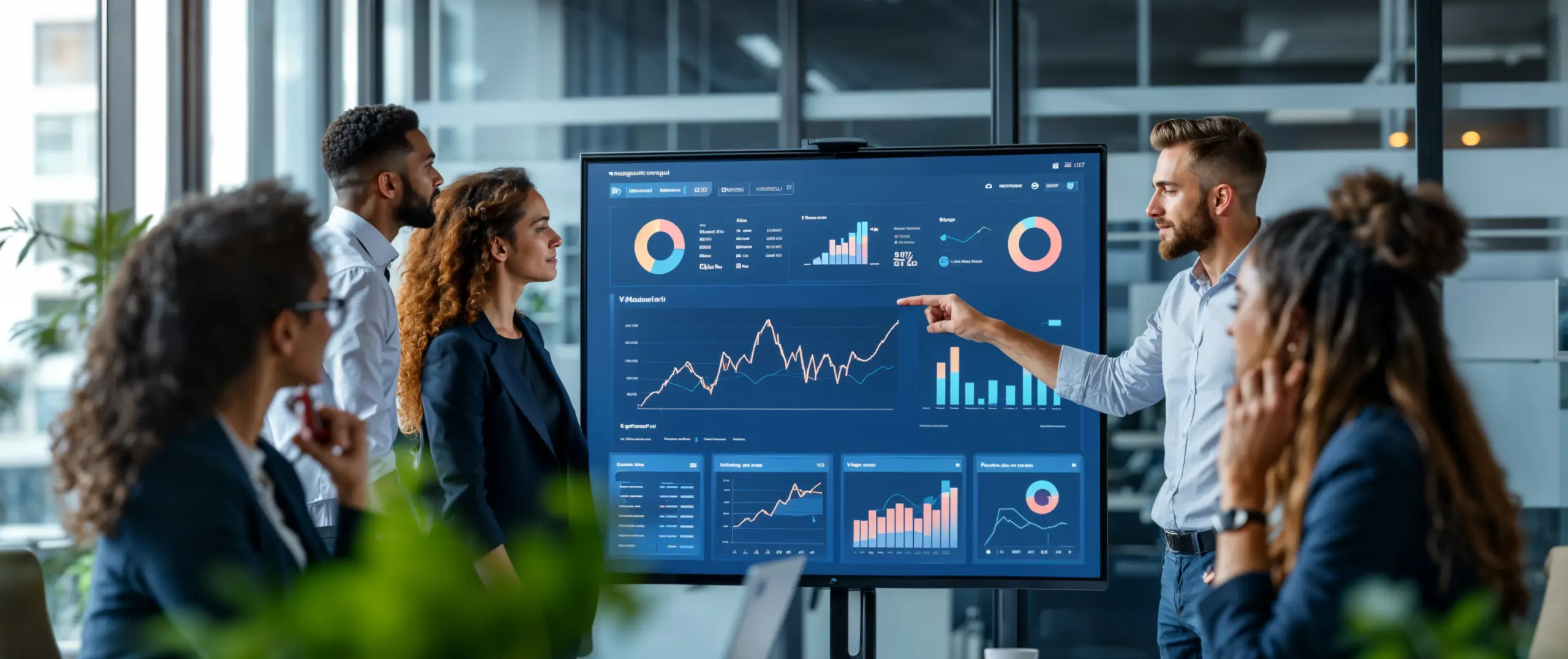
Traditional dashboards swamp users with data they don’t need. The AI-driven approach flips this—giving each persona the insights (and only the insights) that matter to them. Operators get real-time OEE, machine status, and alerts if their actions will hit downstream KPIs. Finance teams see how production choices will impact cash cycles or inventory. Managers finally get “single-pane” visibility that cuts through dashboard fatigue.
The goal isn’t more dashboards. It’s smarter ones—interfaces that translate data into decisions. It’s AI that doesn’t just throw numbers at you, but tells you where to act, and why it matters for the business as a whole.
Co-founder & CTO
Vikrant Ladbe is a technology leader with 20+ years of experience, specializing in cloud-native applications, IoT, and AI-driven systems. He scaled a successful enterprise acquired by LTIMindtree and has led large-scale digital transformation initiatives for global clients.